The Big Five Safari Animals in Kenya: A Modern Guide to Africa’s Most Sought-After Wildlife
When I meet clients for the first briefing, 90% of them ask the same question within the first five minutes:
“Will we see the Big Five?”
And my answer is usually the same. Not because I’m avoiding the question, but because it’s the only honest way to describe safari in Kenya.
“I don’t know exactly what we will see. But I can assure you this—you will see something real. And if we move with patience and timing on our side, the Big Five will likely come into the story.”
That usually changes the mood in the room. Because people arrive expecting certainty. A checklist. A clean safari itinerary where nature behaves like a schedule.
But Kenya doesn’t work like that.
The Big Five safari animals in Kenya—lion, leopard, elephant, buffalo, and rhino—are not staged appearances. They are part of a living system that moves with weather, light, migration, water, and instinct. And that is exactly what makes the experience unforgettable.
If you stay long enough in the bush, you begin to understand something important:
Safari is not about finding animals.
It is about learning how to read the land until the land starts showing you animals.
And Kenya is one of the best places in Africa to learn that language.
From the open plains of the Masai Mara to the elephant corridors of Amboseli, from the volcanic landscapes of Tsavo to the rhino sanctuaries of Nakuru and Ol Pejeta, the country holds some of the richest Big Five safari circuits anywhere on the continent.
But before we talk about where to see them, we need to understand what the Big Five really mean today.
What the Big Five Really Mean in Modern Kenya
When most travelers search for the Big 5 safari animals, they expect a simple list:
Lion. Leopard. Elephant. Buffalo. Rhino.
And yes, that is correct.
But in Kenya, those names are just the surface.
Spend enough time on safari, and you realize each of these animals represents something deeper than identification. They represent behavior, balance, and survival within a shared ecosystem.
The safari Big Five are not just animals you see. They are roles within a functioning landscape:
-
Lions represent control and social hierarchy
-
Leopards represent silence and precision
-
Elephants represent memory and transformation of land
-
Buffalo represent unpredictability and collective power
-
Rhinos represent rarity, protection, and conservation success
In places like the Masai Mara National Reserve or Amboseli National Park, you don’t just tick these animals off a list. You start to see how they influence everything else around them.
Even birds respond differently when a predator is nearby. Even grass patterns tell a story when elephants pass through.
That is the shift most travelers don’t expect.
The Big Five are not separate sightings.
They are connected moments in a shared system.
From Hunting Era to Modern Big Five Safaris
The term “Big Five” originally came from the old hunting era, when these animals were considered the most difficult and dangerous to track on foot.
That history still exists, but it no longer defines the experience.
Today’s Big 5 safari tours in Kenya are built on an entirely different philosophy:
Not pursuit, but observation.
Not trophies, but understanding.
Not control, but patience.
A good guide is not racing between sightings. A good guide is reading the bush.
They notice fresh tracks in dry soil before anyone speaks. They pause when birds suddenly shift direction. They listen to alarm calls that most visitors think are background noise.
And sometimes, they simply stop driving—because something in the air has changed.
That moment of silence is often where the safari begins.
Even in high-density wildlife areas like the Masai Mara, nothing is guaranteed. You can drive for an hour without seeing anything significant. And then, within five minutes, everything happens at once.
That unpredictability is not a flaw.
It is the point.
The Lion: The Quiet Authority of the Plains
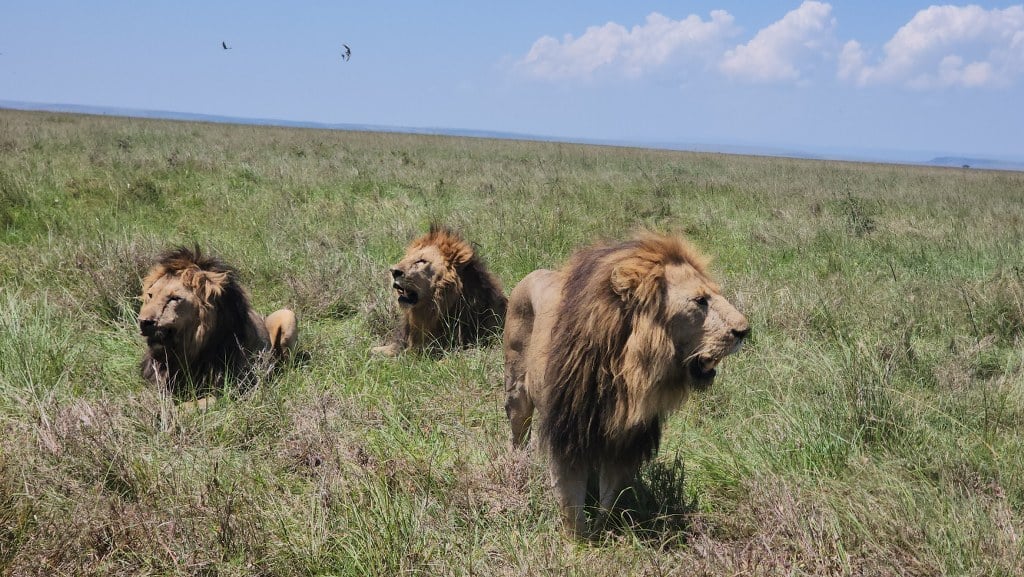 If there is one animal that defines the Big Five safari experience in Kenya, it is the lion.
Not because it is the rarest.
But because it changes how people look at the landscape.
Lions are not always dramatic. In fact, most of the time they are the opposite.
You can drive past a pride without noticing them. They melt into the grass, resting in positions that look almost casual. A tail flick. An ear twitch. A shadow that turns out to be a body.
And suddenly, you realize you were never looking closely enough.
What makes lions so fascinating is not just power—it is presence.
They shape the rhythm of the savannah. Everything adjusts around them.
Typical lion behavior you’ll witness in Kenya:
-
Sleeping in groups during midday heat
-
Becoming active at dawn and dusk
-
Watching herds silently before movement begins
-
Communicating through subtle body language
In the Masai Mara National Reserve, lion sightings are among the most reliable in Africa. In Amboseli National Park, they move across open plains with Mount Kilimanjaro watching from the background. Even Nairobi National Park offers something surreal—lions living within sight of a modern city skyline.
Few places in the world can offer that contrast.
Local guide insight
Early morning drives between 6:30 and 9:00 AM are the most productive for lion activity. After that, they often disappear into shade for hours.
If you are patient during those early hours, lions tend to reveal themselves on their own terms.
The Leopard: The Sighting You Don’t Forget
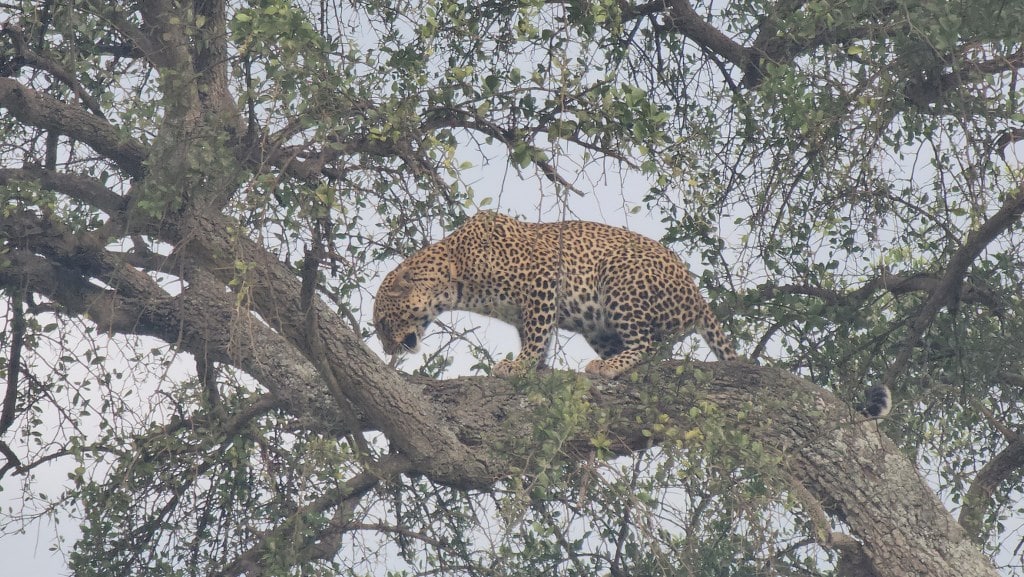 If lions are easy to find, leopards are the opposite.
They are the animal most people don’t expect to see—and the one they never forget when they do.
Leopards do not announce themselves. They do not move in groups. They do not stay in open spaces.
Instead, they exist in layers:
-
Riverine forests
-
Rocky outcrops
-
Dense bushes
-
High branches of trees
You don’t “spot” a leopard in the same way you spot other animals.
You are led to it.
Often by birds screaming overhead. Or by a guide slowing the vehicle without explanation. Or by a shape that looks like part of the tree until it moves.
That is the moment everything changes.
Because leopard sightings feel earned.
In the Masai Mara National Reserve, they are often found near river systems where prey is abundant. In Samburu National Reserve, rocky terrain gives them natural cover and strong hunting advantages.
And once you see one properly—resting on a branch, tail hanging loosely, eyes scanning the horizon—you understand why they are considered the most elusive of the Big Five safari animals.
Local guide insight
When a guide starts scanning trees instead of the ground, pay attention. That shift usually means a leopard has already been found—or is very close.
The Buffalo: Power That Doesn’t Need Attention
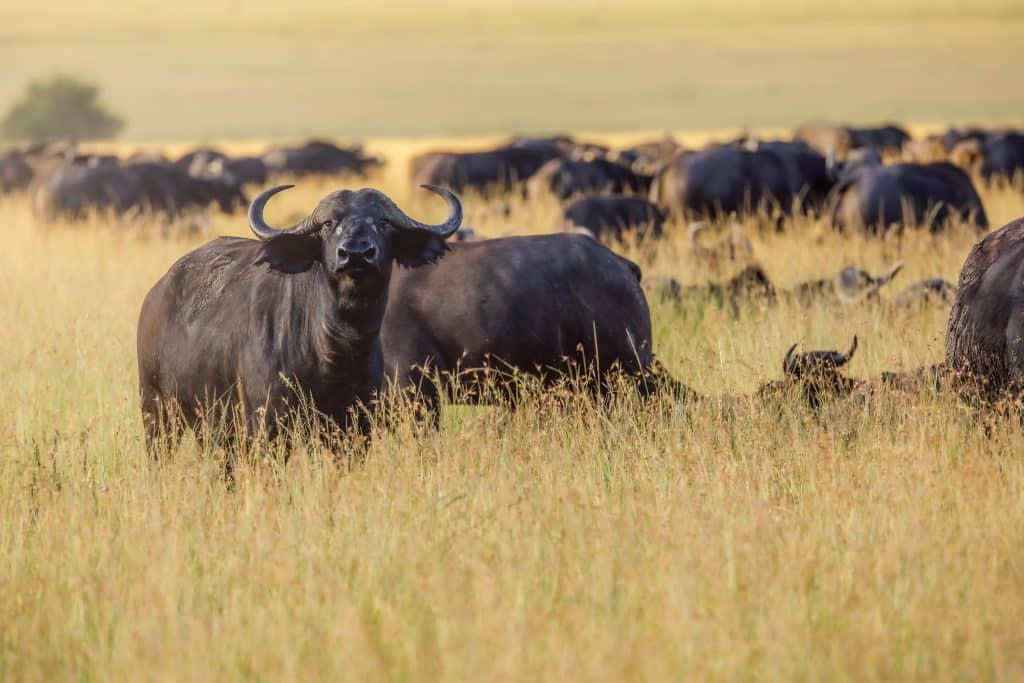 Buffalo don’t behave like predators or show animals.
They don’t perform. They don’t hide.
They simply exist in large, powerful herds that move with purpose and unpredictability.
And that unpredictability is what makes them dangerous.
A buffalo herd can appear calm for hours. Then suddenly shift formation, raise heads, and move as one unit with surprising speed.
There is no warning system you can read easily as a visitor.
In Kenya, buffalo are among the most commonly seen Big Five animals, especially in:
-
Masai Mara National Reserve
-
Lake Nakuru National Park
-
Amboseli National Park
In Lake Nakuru, they often gather near the water’s edge in large groups, creating dramatic scenes during Rift Valley safari circuits.
But their behavior should never be underestimated.
They are responsible for more safari-related incidents than most predators.
Local guide insight
Distance matters more than excitement. Even if buffalo appear calm, they are never predictable at close range. Respecting space is part of safe safari travel.
The Elephant: The Emotional Core of Safari in Kenya
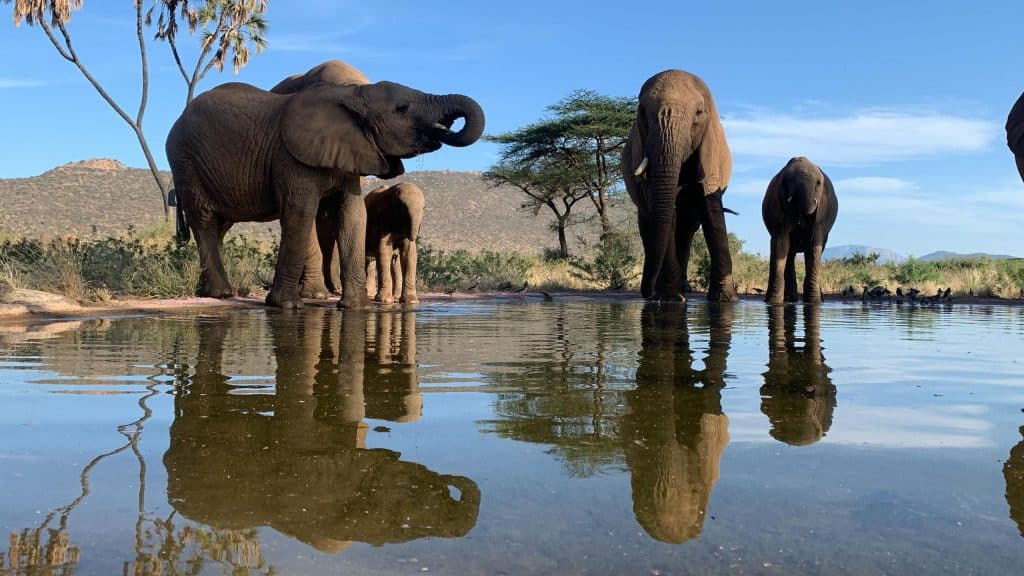 Elephants are often the most emotionally powerful part of a Big Five safari in Kenya.
Not because they are rare.
But because they feel familiar.
They live in families. They remember individuals. They show grief, joy, protection, and curiosity in ways that feel deeply recognizable.
A typical elephant herd includes:
-
A matriarch leading decision-making
-
Mothers protecting calves
-
Young elephants learning behavior through imitation
In Amboseli National Park, elephants move across open plains with Mount Kilimanjaro rising behind them—a scene that defines African safari imagery worldwide.
In Tsavo East and Tsavo West, elephants take on a different identity entirely. Their red dust-covered skin blends with the landscape, making them feel like part of the earth itself.
Elephants are also landscape architects. They shape forests, open water paths, and create movement corridors for other species.
Local guide insight
When elephants pause and raise their trunks, they are reading scent and wind direction. If they continue feeding calmly, they are comfortable. If they shift away, they have made a decision based on information you cannot yet see.
That moment is one of the clearest examples of how animals read the world differently from us.
The Rhino: The Rare Guardian of the Big Five
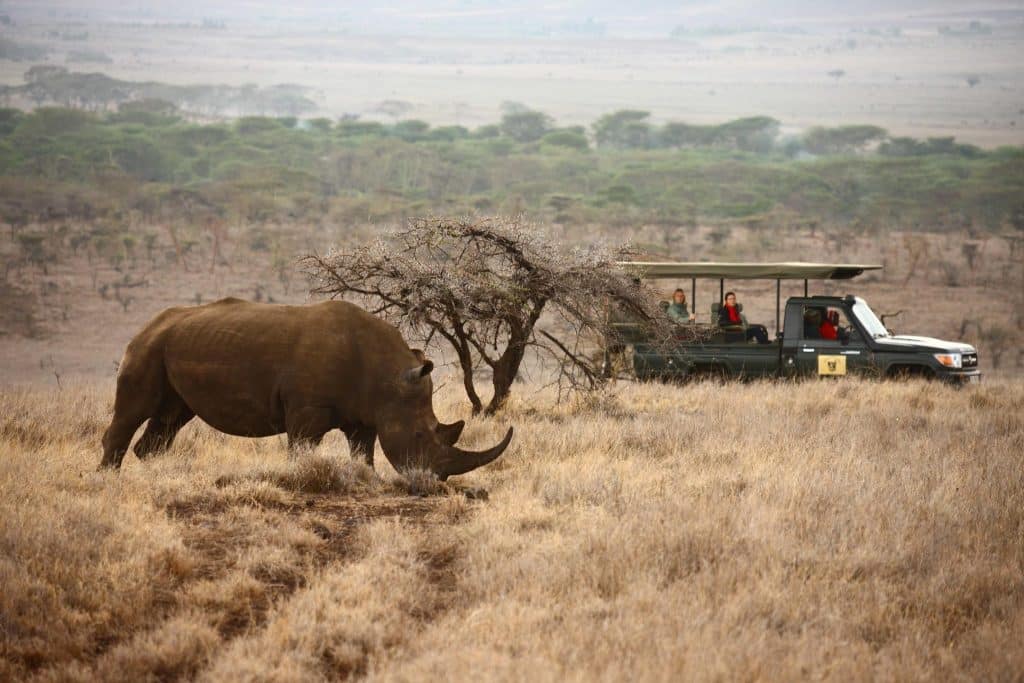 Rhinos complete the Big Five safari animals list—but they are the hardest to encounter in the wild.
In Kenya, you will find:
-
Black rhinos – smaller, more solitary, highly alert
-
White rhinos – larger, more social, easier to observe
Because of heavy conservation pressure, rhinos now survive mainly in protected sanctuaries and national parks.
The best places to see them include:
-
Lake Nakuru National Park
-
Ol Pejeta Conservancy
Ol Pejeta in particular is one of Africa’s most important conservation success stories, offering one of the most reliable rhino viewing experiences in East Africa.
Seeing a rhino is not just a wildlife moment.
It is a conservation moment.
You are looking at a species that has been brought back from the edge through protection, monitoring, and constant human effort.
Local guide insight
Rhinos rely heavily on smell and hearing. Wind direction is critical. If you approach against the wind, your chances of seeing them clearly increase significantly.
The Smart Way to Experience the Big Five in Kenya
If your goal is to see all Big Five safari animals in one trip, route selection matters more than luck.
The most effective combination is:
Masai Mara National Reserve + Lake Nakuru National Park
Why this works:
-
Masai Mara delivers lion, leopard, elephant, and buffalo
-
Lake Nakuru completes the set with rhino and additional wildlife diversity
This combination forms the foundation of most Big Five safari packages in Kenya because it balances density, accessibility, and reliability.
For extended itineraries, you can add:
-
Amboseli National Park for iconic elephant photography
-
Samburu National Reserve for rare northern species and unique terrain
-
Tsavo for vast wilderness and low-density, high-reward game viewing
Each adds a different layer to the safari experience.
What People Remember Beyond the Big Five
Here is something most travelers only realize after their safari:
The Big Five are not always the most memorable part of the journey.
Other moments often stay longer in memory:
-
Giraffes moving slowly through golden morning light
-
Wildebeest stretching across the horizon during migration
-
Hippos surfacing quietly at sunset
-
Birds reacting instantly to predator movement
Kenya is not a single wildlife moment.
It is a continuous sequence of small discoveries.
Every drive feels different because the ecosystem is constantly shifting.
That is why even structured Big Five safari tours feel unpredictable once you are in the field.
You are not controlling the experience.
You are observing it unfold.
Big Five Safari with Guaranteed Sightings at Ol Pejeta Conservancy
Ol Pejeta Conservancy is one of the best places in Kenya for a Big Five safari with near-guaranteed sightings. While no safari can promise 100% wildlife encounters, Ol Pejeta comes very close because it is a well-managed private conservancy with stable, resident animal populations all year round.
It is one of the few destinations in Africa where you can realistically expect to see all members of the Big Five safari animals in Kenya—lion, leopard, elephant, Cape buffalo, and both black and white rhino—within a short stay.
Why sightings are so reliable
Ol Pejeta is not a vast open migration ecosystem. Instead, it is a protected conservancy with strong conservation control, regular monitoring, and experienced guides who track wildlife daily. This creates a much higher success rate for Big Five safari Kenya experiences, especially for first-time visitors or short itineraries.
What you can expect to see
-
Lions are commonly seen in open plains, especially early morning and late afternoon.
-
Elephants move in family herds across grasslands and woodland areas.
-
Buffalo are frequent and often found near water sources in large herds.
-
Leopards are present but more elusive, usually spotted with the help of experienced guides.
-
Rhinos are the highlight, with one of the highest densities in Kenya, making sightings highly reliable.
Why Ol Pejeta stands out
What makes Ol Pejeta special is its combination of high wildlife density and conservation success, especially for rhinos. It is one of the most important rhino sanctuaries in East Africa, including both black and white rhino populations.
This makes it a key stop in many Big Five safari tours in Kenya, often combined with parks like the Masai Mara or Lake Nakuru for a complete safari circuit.
The experience in simple terms
Ol Pejeta offers something rare in safari travel:
less searching, more seeing.
It is one of the most dependable places in Kenya to experience the Big Five in a short time, while also learning the deeper story of wildlife conservation.
Why the Big Five Still Matter
The Big Five safari animals are more than a travel concept.
They are a language for understanding African wilderness.
In Kenya, they represent:
-
Conservation success stories
-
Ecological balance
-
Wildlife diversity across regions
-
And a living safari tradition that continues to evolve
But the real value of a safari is not whether you see all five.
It is how you begin to see differently.
Because after enough time in places like the Masai Mara or Amboseli, the question changes.
You stop asking:
“Did we see the Big Five?”
And you start asking:
“What else did I miss while I was looking for them?”
That shift is the real journey.
And once it happens, safari is no longer just travel.
It becomes understanding.